The Panacea Problem

The way that we all think about our problems, is a problem. This is mostly an issue because we are lazy with how we want the challenges of our lives to be solved. Most everyone is longing for one single thing that is going to solve all of their myriad of problems. On the other side of that panacea is happiness. On the other side of this new boyfriend is the fairytale life you’ve always been dreaming about. On the other side of this pizza is the good feelings that you lost when your boss yelled at you earlier.

But life doesn’t work that way.

No one thing will catapult you into an everlasting orgasmic existence. Your new car will make you marginally happier. Your new dog will be a pain in the butt to take out at 3:30am when he has a bladder infection. Your new boyfriend snores.

There is no cure all for the issues you face in life. Some days will be better than others. Some days will suck. The key is to be able to look at the string of days and push each day to be marginally better. To move past the panacea and into the domain of simple solutions.

Alas, most problems you face in life have been dealt with by many other people who were able to overcome them and likely wrote about their tribulations. The key is finding better advice. Today’s society makes it so easy to get good advice and yet we are all stuck with the same garden variety issues.

“If more information was the answer, then we’d all be billionaires with perfect abs.” – Derek Sivers

The problem with solving problems is that the good advice is drowned out by the charlatan advice. We mistake noise for signal, and we repeat the same old habits that got us into our mess in the first place. We buy programs we saw advertised on Youtube to start businesses because we want to be our own boss, not realizing that self-employed people are always on the clock. We sign up at the gym for a new class and never go because it’s at an inconvenient time (The Bachelor was on).

Don’t look for one single solution to solve your life. Look for small tweaks, five percent shifts in behavior that will adjust your trajectory and push you to do slightly better over time. That is all you need to change your life, no grand plan, no new drug experience. Just small adjustments to the path you’re already on.

“Spend each day trying to be a little wiser than you were when you woke up. Discharge your duties faithfully and well. Systematically you get ahead, but not necessarily in fast spurts. Nevertheless, you build discipline by preparing for fast spurts. Slug it out one inch at a time, day by day. At the end of the day – if you live long enough – most people get what they deserve.” – Charlie Munger

Why Your Mindset About Money Determines Your Fulfillment With Life

In general, there are two kinds of things you can buy in this world. Things that appreciate over time and things that depreciate over time.

The difference between these two is a major one. But often, we make the wrong choice and spend our money on things which do not truly better our lives. We take our time to work and then toss away that hard earned cash on things that rot and rust.

Just think for a second about how you feel when you buy tickets to an event.

You feel excited about how fun the event will be. You are intent on enjoying the experience and being present. Afterwards, you feel happy that you went out and did something which impacted you.

This is why people go to concerts, its not just for the music. They go for the experience of being around so many like minded and high energy individuals.

Contrast this with what happens when you buy an iPad. Yeah you are happy about the purchase. You like your new toy and its fun to use. But over time it becomes just another thing you own and expect to have around. It loses it’s magic. It becomes background noise to your life. When you do this too many times, you start to end up with a bunch of useless junk.

“The things you own end up owning you.” – Tyler Durden in Fight Club

Now, I’m not saying you should skip buying things, especially if you need them. I just want to emphasize that each purchase should come after a moment of reflection. Make every purchase mindfully. Recognize that in some way, whether it be in time or money, you are trading part your life for this object or experience.

I look at it by asking myself the question, “is this purchase going to drastically improve the quality of my life?”

If I can’t answer that with a resounding yes, then it is a signal to me that should probably think twice about buying whatever I am looking at.

Now, not everything that you run through this little test is going to be an investment. You could easily spend the money to get a new iPhone, claiming it improves your life, when you really didn’t need the extra battery life. But the key here is that you are thinking about why you bought something and its implications on your life.

You will still make dumb purchases, but you can use this tool to limit them. You can also use it to refocus on things that will improve your life. When you think about how a purchase will help improve you, it reminds you to take that purchase more seriously.

So, what does this have to do with running out of money.

Well the reason why I wanted to highlight this is because WHAT you spend your money on is directly correlated with how you feel about the expense.

For example, I just spent the majority of my savings to book a 19 day trip through Vietnam, Laos and Thailand. I am doing this as a chance to learn about new cultures and better my understanding of the world.

If I had spent that money on clothes, or even a car, I would likely have buyers remorse. Because those items are the kind of purchase that degrade over time. On the other hand, my trip to Southeast Asia is an investment into myself. Its an adventure, and therefore, I don’t feel fear about the amount I spent on it. Its a search for understanding, so I learn more about the world we live in.

However, this is not the norm. Often when a person spends a lot of money, they feel unfulfilled. This is because they are buying the wrong package. Going broke for a new TV is more compelling than going broke to travel because it is immediate. The catch there is that you’re not really gaining anything long-term, because the TV is zero sum. Once you have it, thats it. Every day you own it, it is worth less.

On the other hand, the trip is an opportunity to learn and grow. It will push you out of your comfort zone and force you to learn things. Even if your trip is horrible, it teaches you how strong you are. It shows you that the worst possible situation has a silver lining. The TV only allows you to “live” vicariously through other people, it doesn’t actually allow you to LIVE. An experience is always worth more when it is firsthand.

Lets say you take trip to Japan, where you learn about a vastly different culture and your life is never the same. This trip might be a small chunk of time in the grand scheme of things. It might have been confusing to not understand the language. It might have sucked to realize that you don’t like Japanese food.

But I bet that the trip made you more self-reliant. I bet that the trip forced you to look at who you are as a person and reconcile that with how you fit into your culture, and how that culture compares to Japanese culture. Travel works like that, it opens your eyes. It reveals to you information you couldn’t get out of a book. The best part is that it always works.

Think of the last time you travelled somewhere and got nothing out of it.

Go ahead, I’ll wait.

The point is, when you spend your money on things that enhance your life, you don’t feel the fear of going broke so strongly. Sure its there, but its more muted, because you know the cost will be worth the benefits down the road. You are transported from the scarcity based mindset, to the confidence based mindset.

I’m not saying that you should spend all of your money irresponsibly. Just be more mindful of what you buy. If you are going to go broke for something, do it for an experience that will really be worthwhile. Do it for something you would brag about to any living person. Not for some debaucherous trip that you would be ashamed to tell your future spouse and children about.

I’ll leave you with the first part of a poem from Chief Tecumseh of the Shawnee, you can find the full text here.

So live your life that the fear of death can never enter your heart.
Trouble no one about their religion; respect others in their view, and
Demand that they respect yours. Love your life, perfect your life,
Beautify all things in your life. Seek to make your life long and
Its purpose in the service of your people.”


If you like this content, feel free to share it. You can also engage with me on Twitter @paulrhobus, or email me at hobus.paul@gmail.com.


Shoot First And Ask Questions Later: AKA How Modern Discussion Works

Its no secret that as a society we are getting worse and worse at discussing problems. From falling literacy rates in colleges to the inability to compromise or agree to disagree. Our culture is daily becoming less and less capable of interacting with ideas that we deem uncomfortable or antithetical to our own beliefs.

This entire problem is ridiculous.

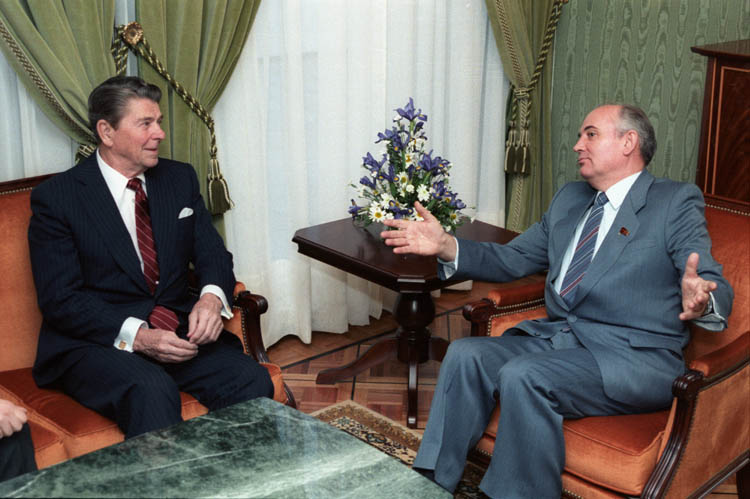
Think about how life would have gone if the United States had not been able to engage the Soviet Union in discussion throughout the duration of the cold war. You can bet we all probably would not be here. In May of 1960 Nikita Khrushchev, the Soviet First Secretary stormed out of a meeting with President Dwight Eisenhower. But what’s important about this is not that he left, its that he tried to discuss prior to leaving. And he didn’t go start World War 3 afterwards. He came back to the discussion table with someone he thought would be more able to talk with, which ended up being JFK.

Discussion is one of the best things about democracy. The practice goes all the way back to Ancient Greece where a system of direct democracy was used. This process has been continually refined and reimagined in order to come to the current representative democracy we have today. This ability to change and reorder the political system was not done by oppression or scare tactics. We got to where we are now because we talked and listened, we engaged in discussion with others even when we didn’t like what they had to say.

kitchen_debateAgain, look at how then Vice President Richard Nixon and Soviet First Secretary Nikita Khrushchev discussed the differences between capitalism and communism in their famous “Kitchen Debate.” This event is actually on film and can be watched here. These are two world leaders who have the collective ability to destroy the planet. So their discussion is tense, but it is ultimately an admission of them realizing that they have to learn to give and take from each other. They have to be able to communicate in order for any sane conclusion to be reached.

This is the problem we have today. Nobody wants to communicate. Everyone wants to be heard without having to do the hard part of listening to what the other person has to say. Everyone wants to be right, but doesn’t want to accept that nobody is perfect. Everyone wants their ideas to be universally accepted, so we only talk “yes men” who act as an echo chamber for our beliefs. This level of insular behavior is a huge negative when everyone partakes in it, because it closes the society off from its ability to weed out bad ideas and grow stronger. After all, if an idea is unchallengable, it is a precedent for totalitarian rule.

We need to be able to talk about the issues that we face as a society. If we are unable to create and continue discussion on a topic, that topic becomes a cancer to our ability to survive. Sure, not everything is comfortable to talk about. Sure, its easier to put your head in the sand. Sure, you can pretend that someone else will come along and solve the problem. But you are someone too, and as a member of this citizenry, its your job to help the rest of us and use the words you learned as a means of building a bridge.

So be part of the solution, engage with people you disagree with, challenge your own beliefs. Create discussion, because the more you do this, the more well-rounded of a person you will be. The more soberly you will be able to examine your life. The easier it will be for you to see the holes in your own logic. It will make you smarter, calmer, more confident. Listen to understand and appreciate the other person’s point of view, even if you could never agree with that perspective. As F. Scott Fitzgerald said,

“The test of a first-rate intelligence is the ability to hold two opposed ideas in mind at the same time and still retain the ability to function.”

Do yourself, and the world, a favor. Ask questions first.


If you like this content, feel free to share it. You can also engage with me on Twitter @paulrhobus, or email me at hobus.paul@gmail.com.
Why I’m Leaving for 5 Months Even Though I Have A Dog

The secret is out, I am going to Australia for five months. Its going to be a big adventure.

But I’m leaving behind my favorite living being.

Spot.

Nothing quite touches your soul in the way a dog does. They truly are a humans best friend. Which means that it really rips me to shreds that I am choosing to leave for such a long time, and to go so far away.

But I did the mental calculus and I figured something out…

The time for me to travel is definitely now. As a fresh college graduate with no loan debt (a story for another time) and a really bad case of wanderlust. It is time for me to escape Minnesota for the rest of the world.

In contrast, the time for me to have a dog… is probably not right now. Though I adore my stinky boy, I definitely miscalculated on getting a dog at this age.

But I can’t just let him go. Moreover, Spot isn’t a normal dog. He is MY dog. He sleeps next to me on the pillow every night. He follows me into the bathroom. He watches me cook. He goes on walks and car rides and plays all with me. I’ve even taken him to work!

So obviously I am keeping the dog. I hope you didn’t think I was going to send him away. I will care for him until the day he dies.

I am going to leave him with my parents and his brother Ranger. Where he will have other people around to love him until I return.

This hurts, and I think about it every day. I torture myself thinking about what if. What if he runs away? What if he gets hit by a car? What if he gives up on life because I leave?

But I can’t do that to myself, because the fact of the matter is, in 15 years Spot will be dead. And in 15 years, I will be thankful for both the time I have already spent with him, and the time I spent in Australia. When I take this longview approach, it doesn’t always make me feel better. But it allows me to see my relationship with him for what it is, something that will have value no matter the length of time it takes up.

Spot will be with me always.

77f958e1-9744-4747-b3c6-3e593a5d4d3e


If you like this content, feel free to share it. You can also engage with me on Twitter @paulrhobus, or email me at hobus.paul@gmail.com.